How to close smartphone cameras in negotiations and production without damaging the equipment
How to organize control of photo and video recording at negotiations, production and regime facilities using the AntiSpy number seal.
Where there is a risk of unauthorized filming
The smartphone has long become a work tool, but its cameras remain a risk when discussing drawings, formulas, prices, personal data or the terms of future deals. A verbal request not to shoot does not give a verifiable result: the phone remains with the person, and the security service does not see whether the camera was turned on after entering.
A complete ban on phones is also not suitable for everyone. The visitor may need communication, e-mail or a corporate application. In such a situation, a practical solution should be to block the lenses themselves and at the same time show an attempt to remove the protection.
How AntiSpy number seal works
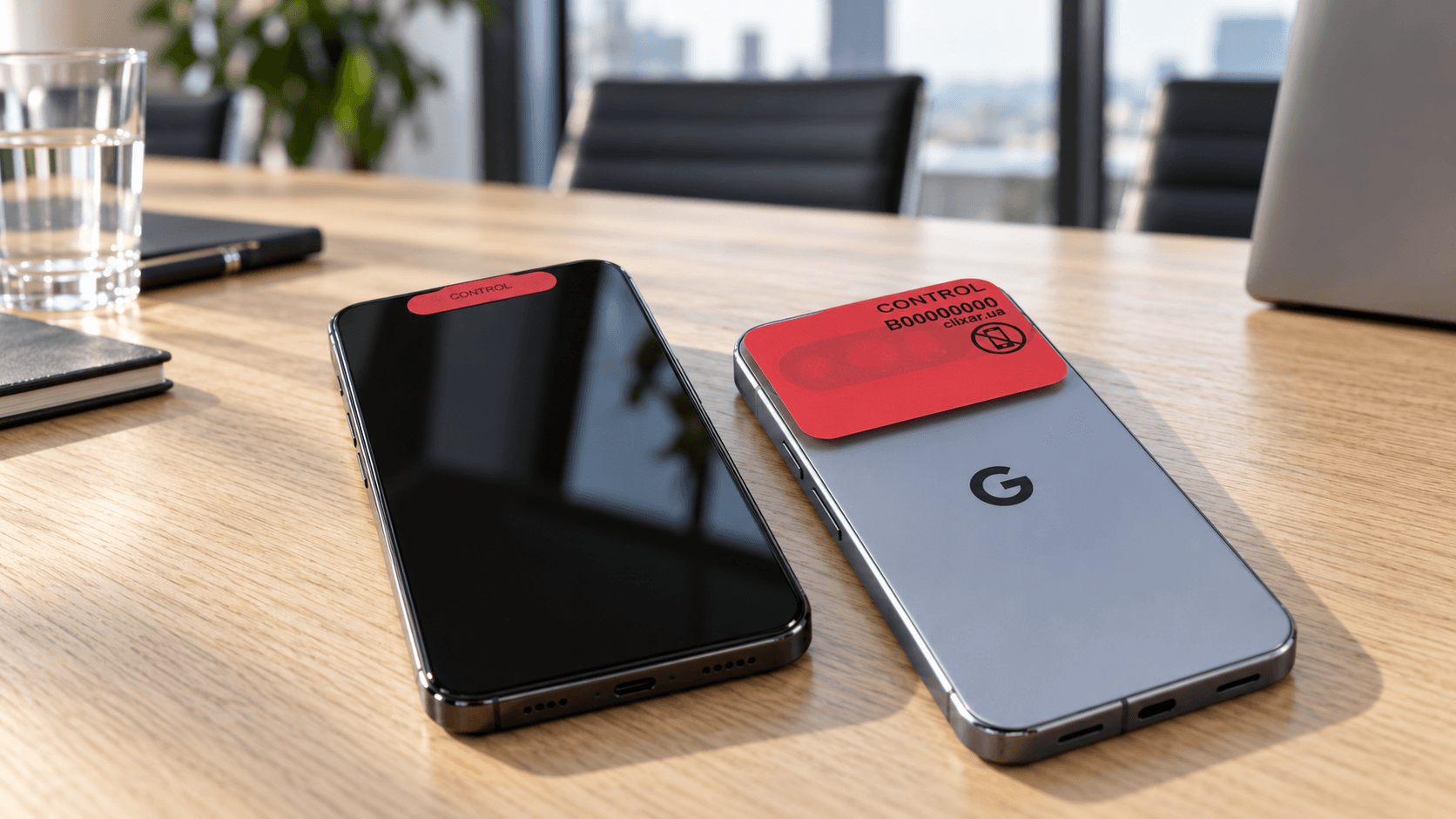
AntiSpy is a disposable seal-sticker for blocking the cameras of communication devices. It is pasted to cover the lenses, and a unique eight-digit number is fixed at the time of issue. If the sticker is tried to peel off, the hidden inscription "OPEN OPENED" will appear. This gives the responsible employee a simple indication of intervention.
The material of the seal is PET polyester with a protective layer. Zero Residue technology means that after standard removal, the glue should not remain on glass or plastic. Applying the company logo is available, which makes it difficult to replace with a regular sticker and makes the procedure clear for the visitor.
How to organize the procedure at the entrance
Designate an area where photography and videography are prohibited and communicate the rule before the meeting begins. An employee at the entrance checks the number of cameras, cleans and degreases the surface around them, sticks a seal and records the number in a journal or electronic form. After applying the sticker, it should be pressed over the entire area and left on the surface for at least 15 minutes for reliable activation of the adhesive layer.
At the exit, the employee checks the number and integrity of the indicator, after which he removes the seal. If a protective glass or film is installed on the camera, the sticker should be removed carefully so as not to lift this coating. Damage, replacement of the number or the inscription OPENED are fixed according to the company's internal procedure.
What to consider before implementation
First, run a test on the smartphone models that your employees and guests use most often. Check the size of the sticker, the location of the cameras, the presence of covers and protective films. Separately appoint a person responsible for recording numbers and disposing of used seals.
AntiSpy does not replace information security policy, but makes one of its requirements physically visible and controllable. The solution is suitable for meeting rooms, production sites, laboratories, warehouses, indoor exhibitions and other areas where phones are allowed but filming is not.
Frequently asked questions
Does AntiSpy leave glue on the camera.The sticker uses Zero Residue technology and is designed to be removed without leaving any glue residue on glass or plastic. Before mass application, it should be tested on specific protective films and coatings.
Can the seal be reused?No. It is a one-time indicator: an attempt to peel it off reveals the protective inscription and makes repeated use visible.
Is it possible to apply a logo?Yes. Company logo and sequential numbering can be applied to AntiSpy.